Phone:
(701)814-6992
Physical address:
6296 Donnelly Plaza
Ratkeville, Bahamas.

Phone:
(701)814-6992
Physical address:
6296 Donnelly Plaza
Ratkeville, Bahamas.
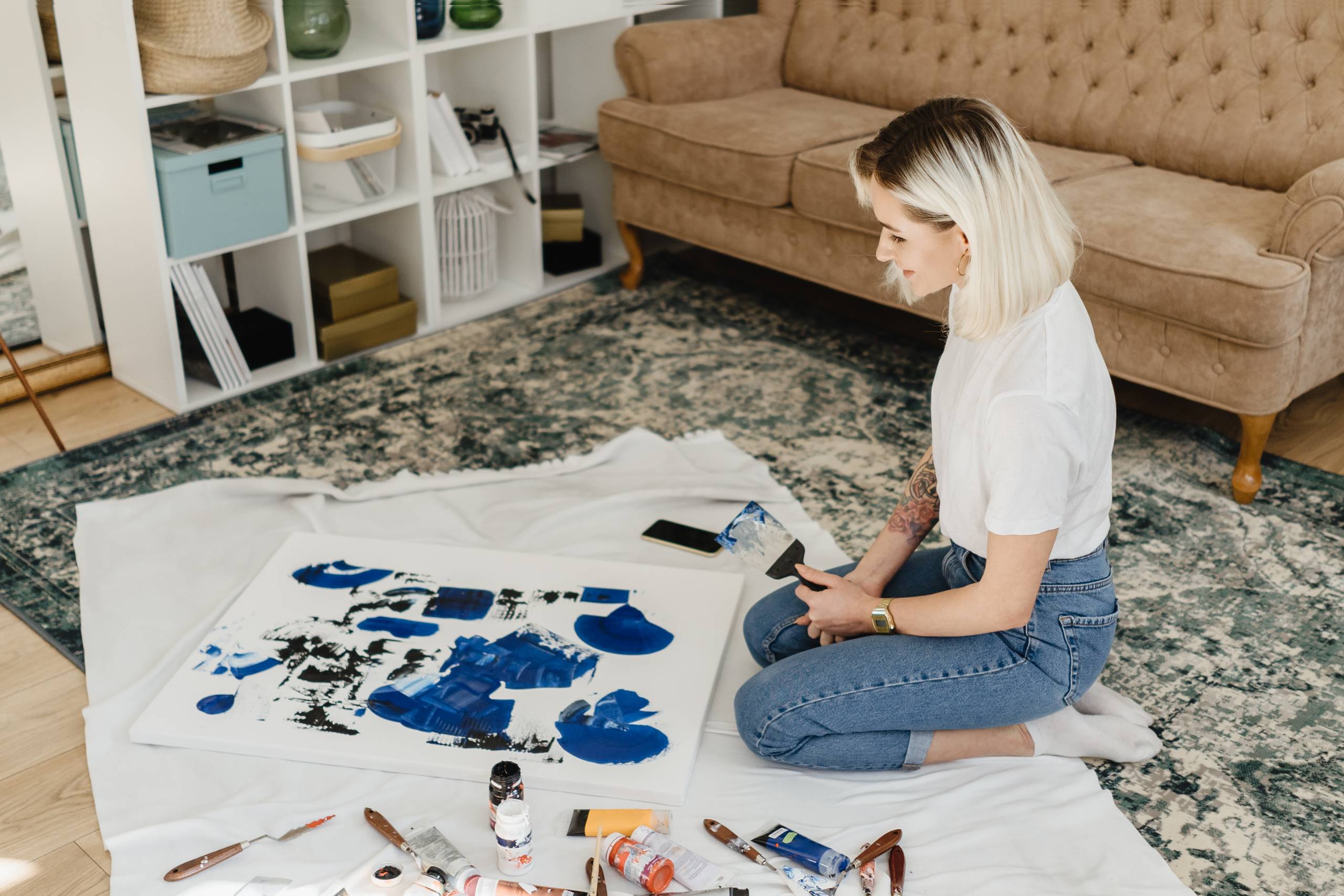
If you look at any painted fabric you may think at first glance that it was done freely without much thought. But if the fabric looks good there is an underlying logic to it. The pattern isn’t just random elements repeated across the fabric. It is also a system that balances the visual attention of your design across the fabric and creates rhythm. If you don’t understand this logic you won’t be able to achieve consistency in your work. Fabric doesn’t act like paper or canvas. Paint bleeds and the dyes are absorbed into the fabric unevenly. If you are just a tiny bit off in your repeats you will see it.
So what is this logic? It begins with a relationship between a motif and the space around it. Everything you paint on fabric is in relation to something else. It is symmetrical, contrasting, flowing. If you ignore this relationship your designs will appear haphazard even if your motif is perfect. You need to plan how your motifs are going to relate to each other and to the space around them. You need to plan how much space you need between motifs and how that will effect the overall repeat of your design. Planning in this way will make your designs look deliberate.
The next part of pattern logic is about planning for how fabric will be used. Fabric is not viewed as a flat object. It moves and folds. A pattern that looks great on a flat surface may not work when the fabric is folded or draped. When you create a design with this in mind you will make sure that the lines and shapes move in a way that works no matter how you look at it. This is especially important if you are designing garments or other functional items that people will be looking at while they are in use. Your design should still be understandable even if you can only see part of it.
You also need to consider color in the logic of your pattern. Colors on fabric will be more intense, may shift and spread and interact in unexpected ways. Anticipating how your colors will work with each other and within the repeat of your design will make the overall effect more cohesive. Instead of using random colors that you think will go together well you will be able to use color to reinforce the forms in your design.
Finally, understanding the logic of pattern will help you feel more secure in your design work. You will be able to be more creative and take risks with your designs. You will see “mistakes” as experiments to be learned from. You will be able to design your own patterns instead of copying patterns designed for other mediums. And you will be able to achieve a “look” that is recognizable as yours.